

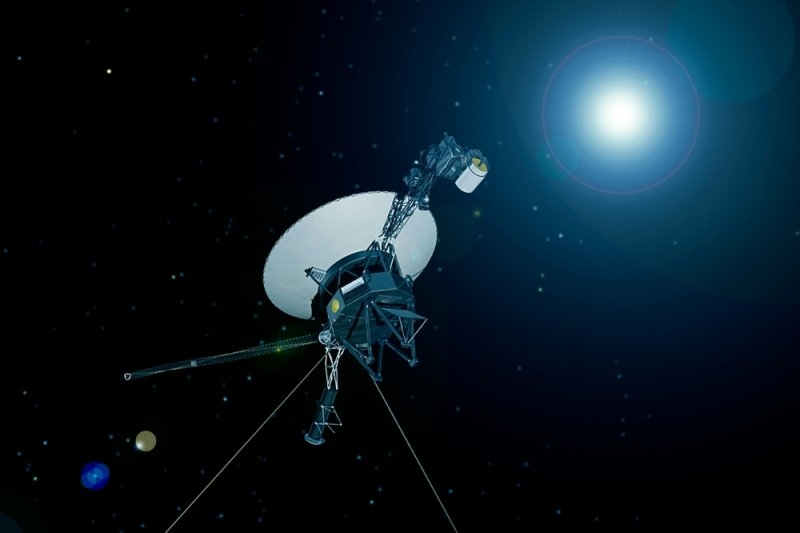
Space is brutally big and unpredictable. That’s exactly why we send probes. These robots fly far beyond Earth, checking out planets, snapping photos of faraway worlds, collecting bits of dust, and measuring things way beyond our senses. Some probes zip through their missions in a matter of months, while others are still going strong decades after launch—even with barely enough power and long waits for instructions from Earth.
Because of these probes, researchers have rewritten what they know about Mars, Jupiter, Saturn, comets, asteroids—you name it. They don’t just take pretty pictures. They pull in data about things that are invisible to the human eye, like radiation or magnetic fields. In this blog, we’ll dig into how probes work, the types you’ll find out there, how they gather and send data, and why their discoveries still matter.
Space probes explained simply are robotic machines sent beyond Earth to gather information about space environments, planets, moons, asteroids, comets, or other targets. They are built for science first, though navigation and survival are equally important.
What are space probes? They are uncrewed spacecraft designed to investigate destinations or regions of space. A space probe may orbit a planet, fly past an object, land on its surface, or travel through an environment while recording measurements.
How do space probes work? Their onboard computers control instruments, navigation, communication, and basic operations. Commands are sent from Earth, measurements are collected, and then useful data is transmitted back through radio systems.
The process is rarely instant. A command can take significant time to reach a distant spacecraft.
Robotic space probes work through a combination of sensors, computers, propulsion systems, communication equipment, and power sources. Some operate autonomously because Earth-based controllers cannot react quickly enough to every situation.
For example, a probe approaching an asteroid may need to adjust its position without waiting for a new command. Its computer uses stored instructions and sensor readings to make limited decisions. That independence becomes more important as distance increases.
Don't Miss: What are the Benefits of Space Exploration for Life on Earth?
The types of space probes depend heavily on their destination and scientific purpose. A Mars lander has very different requirements from a spacecraft flying past the Sun.
Here are common categories of space probes and what they generally do:
| Probe type | Main purpose | Example |
|---|---|---|
| Fly-by probe | Passes an object and records measurements | Voyager 2 |
| Orbiter | Circles: a planet or moon | Mars Reconnaissance Orbiter |
| Lander | Reaches and studies a surface | InSight |
| Rover | Moves across a planetary surface | Perseverance |
| Sample-return probe | Collects material for Earth analysis | OSIRIS-REx |
| Solar probe | Studies the Sun and its nearby environment | Parker Solar Probe |
These space exploration probes show why one design cannot do every job. A rover needs wheels and surface instruments. An orbiter needs precise navigation. A solar probe needs extreme heat protection.
Space probes vs satellites is a useful distinction. Satellites usually operate around Earth or another body for communication, weather, navigation, imaging, or monitoring.
Space probes are generally sent to investigate destinations or environments as part of a scientific mission. The categories can overlap, though. An orbiter around another planet is technically a spacecraft performing a probe mission.
Space probe missions are built around specific scientific questions. The instruments are selected before launch because changing hardware later is usually impossible.
How space probes collect data depends on the target. Cameras create images, spectrometers study light and chemical composition, magnetometers measure magnetic fields, and particle detectors examine radiation and charged particles.
A probe studying an asteroid might analyse surface minerals. Another spacecraft near Jupiter can measure its magnetic environment. Data is stored onboard before being transmitted to Earth, especially when communication windows are limited.
This is where space probe technology becomes extremely valuable. Instruments can detect information that ordinary photographs cannot show.
How space probes communicate with Earth is surprisingly straightforward in principle. Radio antennas send encoded signals toward Earth-based receiving stations. Those signals can travel across enormous distances before being captured and processed.
The farther the spacecraft, the longer communication takes. Controllers therefore cannot always operate a probe like a remote-controlled vehicle. Instructions are prepared carefully and transmitted, and then the spacecraft responds when the signal arrives.
Suggested Reading: Space Debris Explained: Risks, Causes, and Solutions
Space probes need reliable power because their instruments, computers, heaters, and communication systems cannot operate without it. Travel also requires careful management of speed and trajectory.
How space probes get power depends on location and mission length. Solar panels are common for spacecraft operating close enough to the Sun to receive useful sunlight. Farther missions may use radioisotope power systems, which produce electricity from radioactive decay.
Power is limited. Instruments may therefore be switched on only during specific observations. Heating systems can also be essential because deep space is extremely cold.
How space probes travel through space is not simply a matter of pointing at a destination and accelerating. Mission planners calculate trajectories using gravity, speed, timing, and orbital mechanics.
Some spacecraft use gravity assists, passing near planets to change their speed or direction without carrying enough fuel to perform the entire manoeuvre themselves. It is a clever trade. Fuel is saved, but the route can take longer.
Famous space probes have provided some of the most important close-up views of our solar system. Their missions also show how dramatically spacecraft design has changed.
Voyager 1 and Voyager 2 are among the best-known examples of space probes. They studied the outer planets before continuing into interstellar space.
Other major examples include Galileo, which investigated Jupiter and its moons; Cassini, which transformed knowledge of Saturn; New Horizons, which delivered detailed observations of Pluto; and OSIRIS-REx, which returned an asteroid sample to Earth.
These missions were not identical. Their instruments and flight paths were shaped around very different questions.
NASA space probes include missions aimed at planets, moons, asteroids, comets, and the Sun. Parker Solar Probe, for example, was designed to study the Sun's outer atmosphere from an unusually close distance.
Space exploration probes are especially useful when conditions are too dangerous or distant for crewed missions. They can enter environments where radiation, temperature, pressure, or distance would make human travel extremely difficult.
Space probes do a lot more than just snap pictures. They’re stuffed with scientific instruments that let researchers dig into a planet’s geology, atmosphere, magnetic fields, radiation, temperatures, particles—you name it. They even analyse what things are made of.
Exactly how these probes explore a planet depends on their design. Some, like orbiters, circle around and map the surface from above. Others, like landers, touch down and measure the soil and air up close.
Then there are rovers. These little robots can actually drive around, hopping from spot to spot. On Mars, rovers have made a huge difference. Instead of being stuck in one spot, scientists can compare rocks and landscapes from miles apart, uncovering a much richer story about the planet.
Examples of space probes include Voyager 1, Voyager 2, Cassini, Galileo, New Horizons, Parker Solar Probe, OSIRIS-REx, and multiple Mars orbiters, landers, and rovers.
Each demonstrates a different use of robotic spacecraft. Together, they have made distant worlds less abstract. We now have measurements, maps, samples, weather observations, and detailed surface images.
Also Read: Ocean Mysteries Uncovered: Secrets Hidden Beneath Waves
Thanks to space probes, places that used to be out of reach are now charted and measurable. They’ve flown by planets, orbited worlds, landed on alien ground, picked up samples, and crossed into unexplored territory. The real value isn’t just the dramatic photos they beam back, but everything else—measurements of rocks, gas, temperatures, and the like—that’s helped scientists upend old ideas.
The technology’s getting better every year, but the concept hasn’t changed much: build a machine that can go where humans can’t, let it explore, and send the knowledge back home. Space probes turn impossible journeys into real science. That’s why they’ve become some of the most powerful tools we have for exploring the unknown.
Not really. Most probes can’t do major repairs by themselves because, well, nobody’s out there with a wrench. Sometimes, they’ve got backup systems that kick in if something breaks, so the mission can keep going.
Absolutely—many carry cameras. But that’s just one set of tools. Depending on what they’re trying to discover, they might also have instruments for checking out particles, radiation, temperature, magnetic fields, and the stuff things are made of.
A probe can speed up or slow down or change direction, but coming to a complete stop relative to the Sun or anything else takes a crazy amount of energy. So usually, they’re always moving, following paths plotted out long before launch.
No. Space probes do not talk over the internet, but over a special spacecraft communications system. The information they carry is sent via radio, analysed by mission teams here on Earth.
Not a chance with today’s tech. Space probes stick to our solar system and maybe a little beyond. The next galaxy is so far away that even our fastest probes aren’t getting there anytime soon.
This content was created by AI