

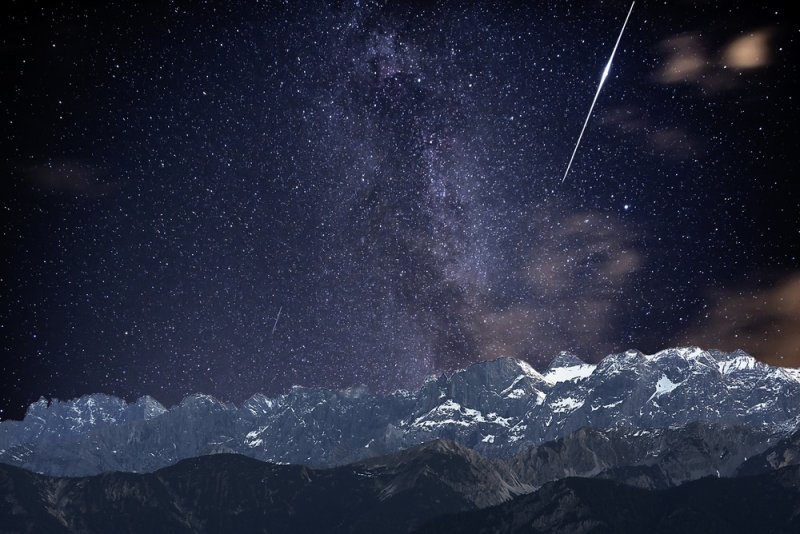
The Perseid meteor shower 2026 is one of the biggest events for skywatchers this year. It is caused by dust particles from comet 109P/Swift-Tuttle, which can produce some of the fastest, brightest meteors to observe.
The peak has now passed; however, you can still watch for some meteors throughout its active season as long as you have a dark, clear sky with this Perseid viewing guide.
The 2026 Perseid meteor shower runs from July 17-August 24, with peak observation on the night of August 12 and the morning of August 13. Observers will be able to see over 100 meteors an hour under prime viewing conditions; however, this is dependent on your viewing location, weather conditions, and the darkness and clarity of the sky.
This is an annually recurring meteor shower which is caused when Earth passes through the remaining debris shed by comet Swift-Tuttle. These small chunks of ice and rock enter the Earth's atmosphere at incredibly fast speeds and then become heated up until they glow and burn up in the atmosphere as visible meteors, and because this shower originates from the region of the sky where Perseus lies, the meteors appear to emanate from this particular region.
Check This One: Best Places to See Milky Way Around the World In A Lifetime
This year was one of the most exciting opportunities to observe meteors from this shower. This was thanks to the new Moon occurring on August 12, which meant that there would be far more competition for observers attempting to spot their meteors. The lack of moonlight is considered to be the prime cause behind meteor showers such as this, and for 2026 this was not an issue.
With regard to what your viewing experience will be like after the peak: while the meteors will still be around, you should opt to go where the viewing will be darkest. Leave street lights and buildings at a distance to ensure that your view will be as clear as possible:
The guide to observing a meteor shower such as the Perseids this year is simpler than what many may assume. Go to an elevated and safe position with a wide, dark, and unobstructed view of the sky overhead. Allow a while for your eyes to adjust to the lack of light, especially after viewing your phone screen.
Expect quite some time between seeing two individual meteors; you could be looking up at darkness for a while before you spot your first, so try to enjoy yourself and look around the sky as you wait. As your eyes can take around ten minutes to adjust to the darkness, staying outside for as long as possible can significantly increase how many meteors you will be able to view.
The time between around midnight and early morning hours each day of a Perseid shower tends to offer the best time to see Perseids. This has been a long-held belief when observing any meteor shower and is usually considered prime viewing time for seeing the most meteors.
In answer to those who've wondered what time of day is best for watching Perseids after the August 12-13 maximum: don't assume that the Perseids 2026 have finished already! As mentioned, the shower's active period runs through August 24, which means there is still some residual shower activity occurring.
Learn More: Top Best Night Vision Binoculars for Night Adventures 2026
The Perseid meteor shower 2026 delivered a stellar spectacle. As well as having the dark new moon and two nights around the August 12 and August 13 maximum, people also seemed to be clear; it should still be going strong until August 24.
So if you have the 2026 Perseid meteor shower tonight on your plans, choose to go out into the darkness, keep your patience up, and choose the right viewing site!
No, you don't need a telescope or binoculars to watch meteors. Your eyes can provide the best overall view of the sky, and you want to avoid restricting your vision because the Perseids appear in more locations than in Perseus.
The intensity of each meteor is dictated in part by the material and size of the original particle hitting our atmosphere, with larger particles resulting in bigger bursts of brightness and even certain bright meteors displaying as visible fireballs.
You might not want to, because although the meteor streaking appears to emanate from Perseus, its trail can stretch in many different parts of the sky. Looking across a wider scope would yield more sightings.
Yes, but it will be much more difficult to see all the fainter ones under city light. A couple of fairly bright ones can be seen from town, but traveling to a darker spot can make you see a significant increase in the number for a viewing session.
Take a recliner/blanket to sit back on, comfortable clothing to wear, some water, and a small light you can turn on low if needed. Most important of all, find a place that is much less visible than the city lights!
This content was created by AI