

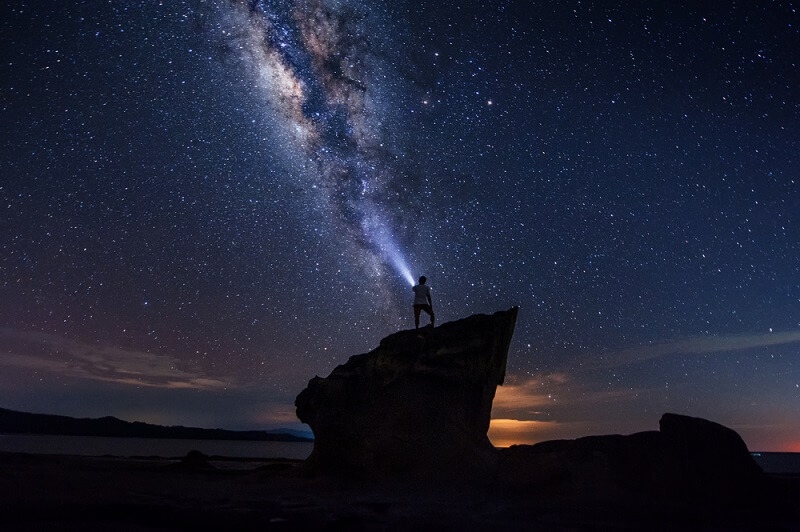
Looking up at the night sky feels normal, yet actually seeing the Milky Way feels rare. Here’s the thing: most people have never seen it clearly. Learning how to view the Milky Way turns an ordinary night into something quiet and powerful. The Milky Way galaxy stretches across the sky, but the view from Earth depends on darkness, timing, and location. Many search for the best time or place to see the Milky Way, yet simple guidance often feels missing. This article explains how to view the Milky Way in an easy, calming way that works for beginners.
The Milky Way is a galaxy made of billions of stars, dust, and gas. From Earth, it looks like a pale river of light. The Milky Way galaxy cannot be seen in its entirety because Earth lies within it.
Important things to understand
Knowing this removes confusion and helps people learn to view the Milky Way with realistic expectations.
Learn More Here: Best Dark Sky Parks in USA to See Milky Way in 2026
Many expect bright colors like those in photos online. Real life looks softer. The view of the Milky Way from Earth appears as a cloudy band with dark streaks.
What people usually notice
Understanding this helps reduce disappointment when viewing the Milky Way for the first time.
Timing matters more than equipment—the best time to see the Milky Way is usually when the sky stays darkest.
Key timing tips
What this really means is that patience brings a clearer view of the Milky Way from Earth.
The Milky Way changes position as Earth moves. The best time to see the Milky Way depends on the season.
Season overview
Knowing seasonal patterns helps people plan better trips to view the Milky Way.
Location shapes everything. City lights wash out stars. The best place to view the Milky Way is far from artificial light.
Ideal locations include
These places offer the clearest views of the Milky Way from Earth.
Light pollution reduces contrast. Even small lights matter. For viewing the Milky Way, darkness is essential.
Ways light pollution interferes
Reducing light pollution improves how well you can view the Milky Way more than buying gear.
No telescope is needed. Learning to view the Milky Way starts with simple habits.
Steps that help
The Milky Way galaxy appears faint at first, then grows clearer as eyes adapt.
Human eyes need time. Rushing ruins the experience.
Eye adjustment tips
This adjustment improves viewing the Milky Way without effort.
Tools help reveal detail, but they are optional.
Helpful tools include
These tools enhance the view of the Milky Way from Earth without complexity.
Clear skies matter. Weather plays a significant role.
Best conditions include
Clouds, haze, and smoke block even the best places to view the Milky Way.
The brightest part is the galactic center. It looks thicker and brighter.
Key facts
Seeing the core helps people feel successful in viewing the Milky Way.
The sky shifts slowly through the night. The Milky Way galaxy appears to rise and fall.
What happens over time
Watching these changes adds meaning to how to view the Milky Way.
Travel opens more opportunities. The best place to view the Milky Way often sits far from cities.
Good travel environments include
Travel planning increases the likelihood of intense Milky Way viewing.
Small mistakes ruin many attempts.
Mistakes to avoid
Fixing these mistakes quickly improves the view of the Milky Way from Earth.
Preparation saves time and disappointment.
Preparation checklist
Planning supports success in viewing the Milky Way.
Safety matters when traveling at night.
Simple safety tips
Comfort improves patience when viewing the Milky Way.
Seeing the Milky Way changes perspective. The Milky Way galaxy reminds viewers of scale and time.
What this really means is silence feels deeper. Many feel calm, small, and connected while viewing the Milky Way.
Don’t Miss Out: The Secrets of Milky Way: Our Galaxy’s Formation & Evolution
First attempts feel uncertain. Simple habits help.
Helpful tips
These tips improve your chances of seeing the Milky Way at the best time.
Learning to view the Milky Way takes darkness, patience, and timing. The best time to see the Milky Way and the best place to view the Milky Way shape results. With careful planning and clear skies, viewing the Milky Way becomes a peaceful, unforgettable night-sky experience.
For most people, July offers an outstanding balance of warm weather, long nights, and the galactic core being high in the sky during prime evening hours.
Not at all. The Milky Way is a naked-eye object. Telescopes and binoculars zoom in on small sections, but your own eyes take in the whole majestic arc.
The whole band of the Milky Way is almost impossible to see from urban areas due to light pollution. You might glimpse the brightest parts on an obvious, moonless night from suburban skies, but to truly see it, you must travel to a dark location.
Yes, the view is often considered superior. The galactic core appears higher overhead, and you get to see additional spectacular regions like the Large and Small Magellanic Clouds, two dwarf galaxies orbiting our own.
This content was created by AI